


7/21/26
Guardians of the Llevant: a historical comparison of the Castell de Capdepera and Sant Salvador in Artà
The skyline of the Mallorcan Llevant region is unshakeably dominated by two stone fortresses that face each other across the valleys: the Castell de Capdepera and the walled enclosure of Sant Salvador in Artà. Both constructions define the military, religious and social history of the north-east region of the island, yet they offer the visitor diametrically opposed architectural and logistical experiences.
At Predi Son Jaumell we are part of this historical and heritage fabric. We understand that our guests seek not only complete rest at our facilities, but also to immerse themselves in the island's cultural heritage without suffering operational friction or logistical surprises during their excursions. Planning a visit to these fortresses requires knowing in advance the level of physical effort involved, the best parking spots and the real opening times.
The aim of this technical guide is to compare the origins of both fortifications, detail their updated entry fees, break down their operating hours in the 2026 season and, above all, assess the physical demands and the real accessibility each visit requires, so that you can structure your cultural itinerary with total precision.

Quick comparison
To make decision-making easier based on the time available and the physical condition of your companions, we have summarised the technical and historical parameters of both fortresses in the following logistical matrix.
|
Logistical metric |
Castell de Capdepera |
Sant Salvador Sanctuary (Artà) |
|
Historical origin |
14th century (1300). Defensive walled town |
Islamic origin, converted into a Christian sanctuary and fortress |
|
Entry fee (2026) |
Approx. €4 (funds go towards conservation) |
Free access (voluntary donations accepted) |
|
Physical demand (on foot) |
Medium/high (steep stone streets, no ramps) |
High by stairs (180 steps) or low (vehicle access) |
|
Panoramic views |
Menorca Channel and north-east coastline |
Artà valley, eastern Tramuntana mountains and the Ferrutx massif |
|
Distance from Son Jaumell |
5 minutes by car (direct local route) |
15 minutes by car (via the Ma-15) |

Castell de Capdepera (the border fortress)
The Castell de Capdepera is not a simple residential castle for noble use, but an extensive fortified enclosure of 8,000 square metres that once housed an entire population within its walls. Visiting it is a direct immersion in the harsh reality of medieval Mallorca.
A brief historical and strategic note
The fortress was ordered to be built in 1300 by King Jaume II with a strictly defensive purpose: to gather the scattered population of the area in order to protect it from the constant and devastating attacks by North African corsairs. However, the site already had immense geopolitical importance. It was on this very hill where, in 1231, King Jaume I the Conqueror orchestrated the celebrated Treaty of Capdepera. Through a brilliant military stratagem —lighting hundreds of enormous bonfires on the mountain to simulate the presence of a colossal army— he secured the unconditional surrender of the Muslims of the neighbouring island of Menorca without drawing a single sword. Inside the enclosure stand the Gothic church of the Esperanza and the original watchtower.
Opening hours and fees
The management of the castle depends on the local board, and its upkeep is financed through the sale of tickets.
- Entry fee: general admission costs approximately €4 per adult. Residents of the Balearics and children usually have free access or heavily reduced rates.
- Operating hours: during the high-season months (April to October), the enclosure opens its doors from 10:00 to 19:00. In the winter months, closing is brought forward to 17:00 due to the lack of natural light.
Accessibility, terrain and parking logistics
Logistics is the most critical factor when planning this visit. The castle crowns the summit of the Capdepera hill (159 metres above sea level).
- Strategic parking: trying to reach the very gate of the enclosure by rental car is a frequent mistake that leads to dead-end streets. We recommend parking your vehicle in the lower areas of the town (such as the Plaça de l'Orient or adjacent streets) and making the approach on foot.
- The ascent and the architectural barrier: the pedestrian path to the summit requires climbing stone stairways and cobbled streets with a gradient of over 15%. Once inside the castle, the terrain is uneven. There are no concrete ramps or wooden walkways. The enclosure is not accessible for wheelchairs, and it is extremely hostile for prams. We strongly recommend closed sports shoes and baby carriers.
Sant Salvador Sanctuary in Artà (the spiritual refuge)
Barely 10 kilometres inland, the skyline of the town of Artà is crowned by the monumental complex of Sant Salvador. Unlike Capdepera, whose purpose was to found a town, Sant Salvador historically functioned as an almudaina (citadel) and a spiritual and health refuge in times of crisis.
A brief historical and strategic note
The current walled enclosure, of imposing Renaissance craftsmanship (16th century), sits on the remains of an ancient Muslim fortress. The inner sanctuary, of elegant proportions and a barrel vault, was rebuilt in the 19th century. Historically, the robust walls, a metre thick, served to shelter the inhabitants of Artà not only during pirate raids, but also as a quarantine and isolation zone during the lethal outbreaks of bubonic plague that ravaged the island in past centuries. Inside the church rests a Romanesque wooden carving of the Virgin of Sant Salvador, one of the oldest in Mallorca.
Opening hours and fees
Unlike the neighbouring castle, access to the walled enclosure of Sant Salvador, its gardens, viewpoints and outer courtyards is free and completely open during daylight hours. The church keeps opening hours subject to worship (generally from 10:00 to 18:00). At the temple door there is a collection box where voluntary donations are accepted to cover the high maintenance costs of the roof and the interior altarpieces.
Accessibility and logistics: the dual access
The terrain of Artà allows two radically different approach strategies, which makes this monument a far more versatile option than Capdepera.
- The traditional pedestrian route (high demand): the classic experience begins at the imposing church of the Transfiguration (in the centre of the town). From there, you climb a majestic and photogenic stepped avenue flanked by centuries-old cypresses and stone crosses. There are exactly 180 uneven stone steps. It involves a notable cardiovascular effort, especially in the months of July and August.
- The logistical "hack" for reduced mobility (low demand): for people with reduced mobility or families, there is a tarmac alternative. Along the rear slope of the hill runs a very narrow single-lane road that winds up to the summit. This route ends at a small car park located just twenty metres from the main gate of the wall, eliminating 95% of the physical effort of the visit.
Predi Son Jaumell: the extension of history and comfort
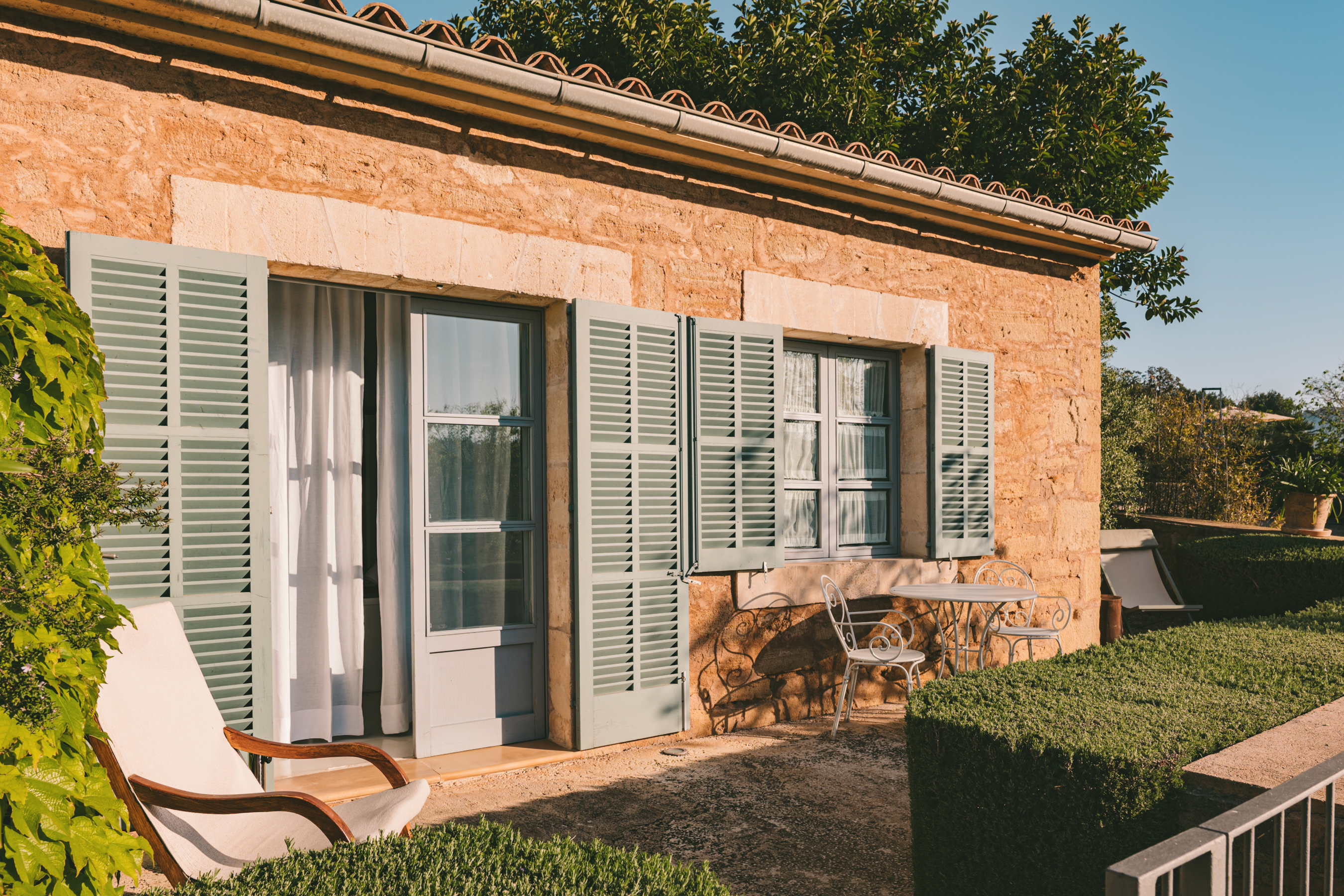
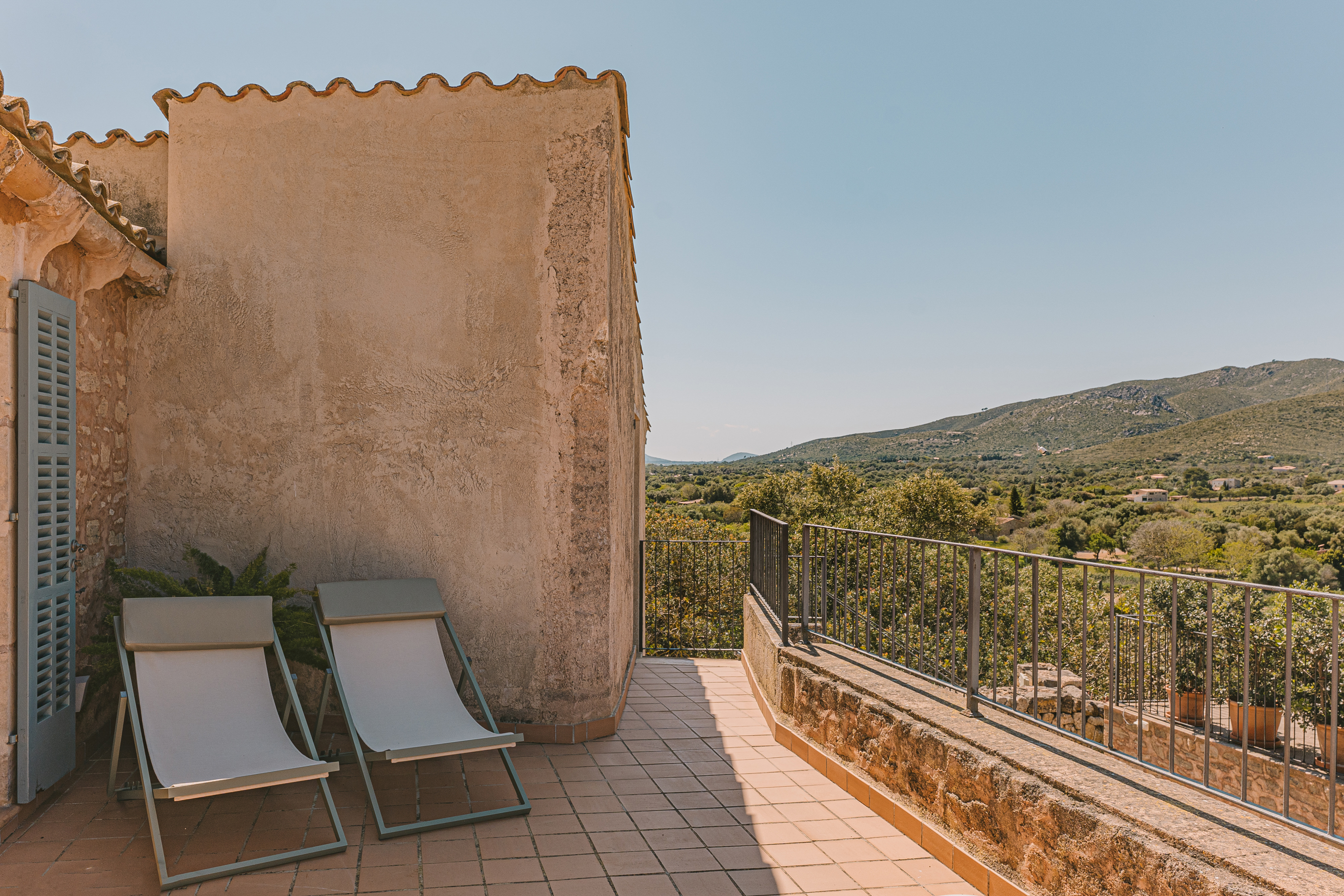
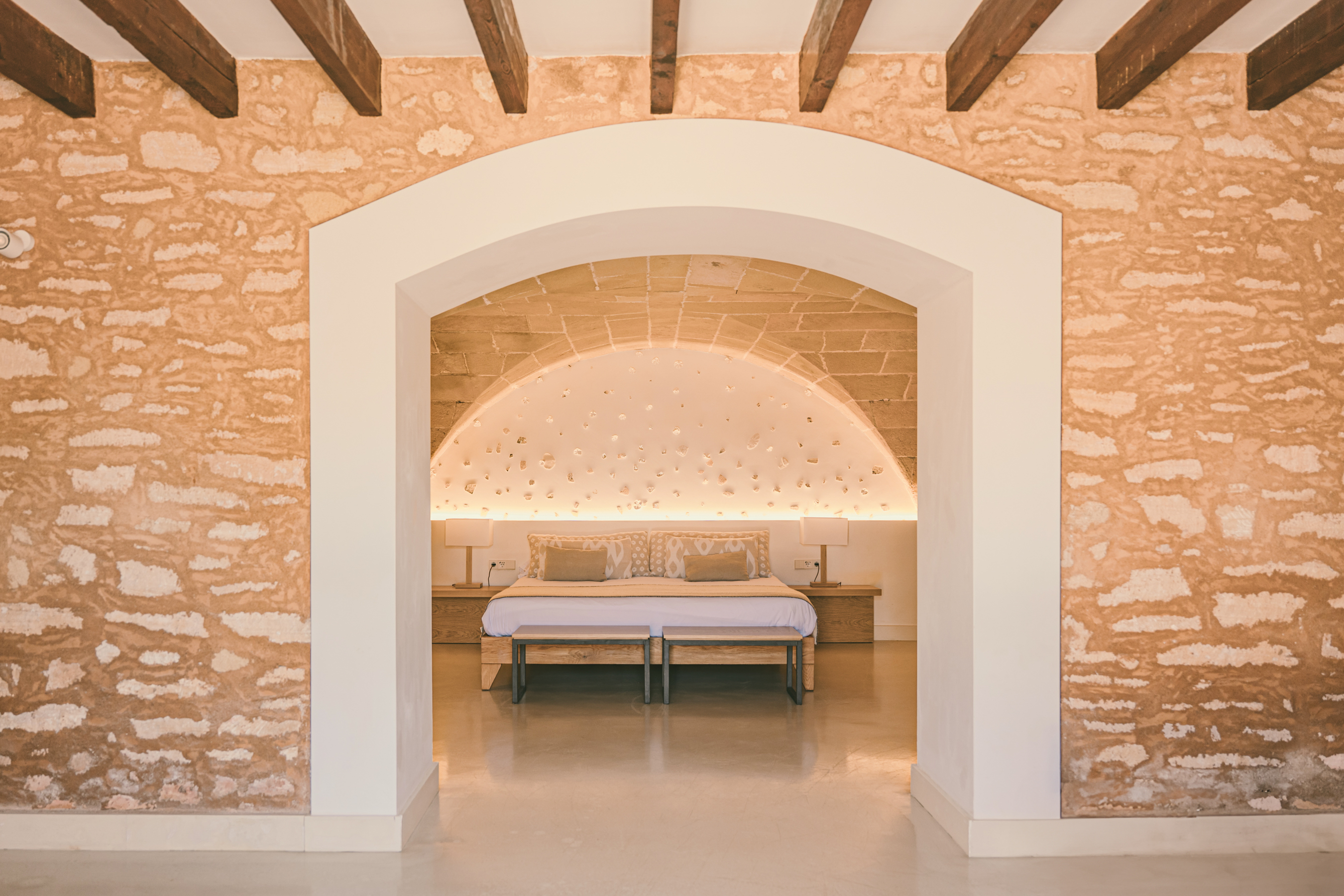
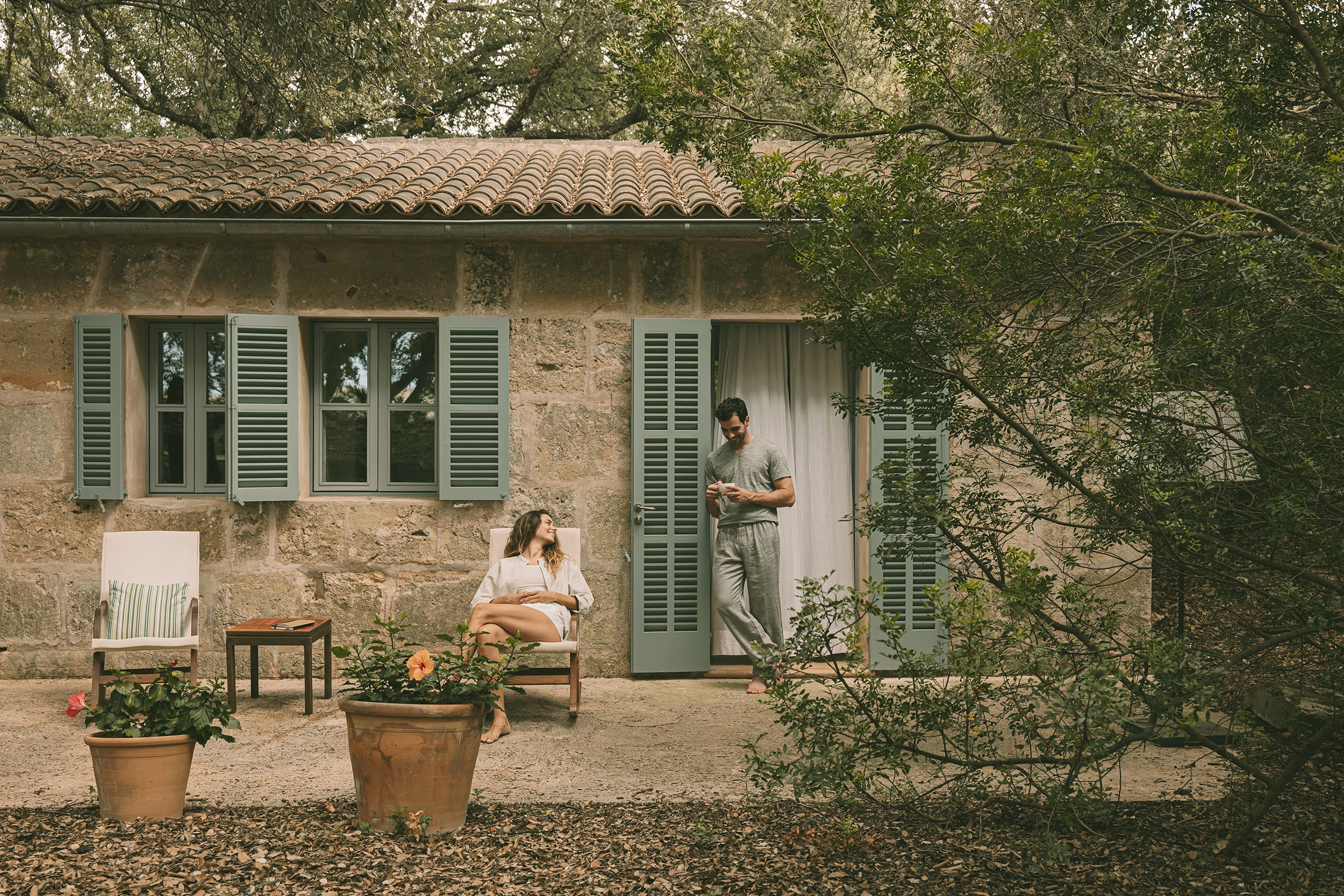
Understanding the context of isolation, protection and subsistence in which these medieval fortresses were born is the key to grasping the true architectural essence of our own estate. Predi Son Jaumell is an 18th-century Mallorcan possessió, catalogued as historical heritage, which shares with these castles the legacy of thick stone walls, round arches and complete integration with the Llevant landscape.
However, the aim of our hospitality is to offer the perfect contrast. After a morning of historical exploration, subjected to the rigour of the limestone, the rugged topography of the Artà steps or the slopes of Capdepera, the return to our estate represents rest and complete decompression.
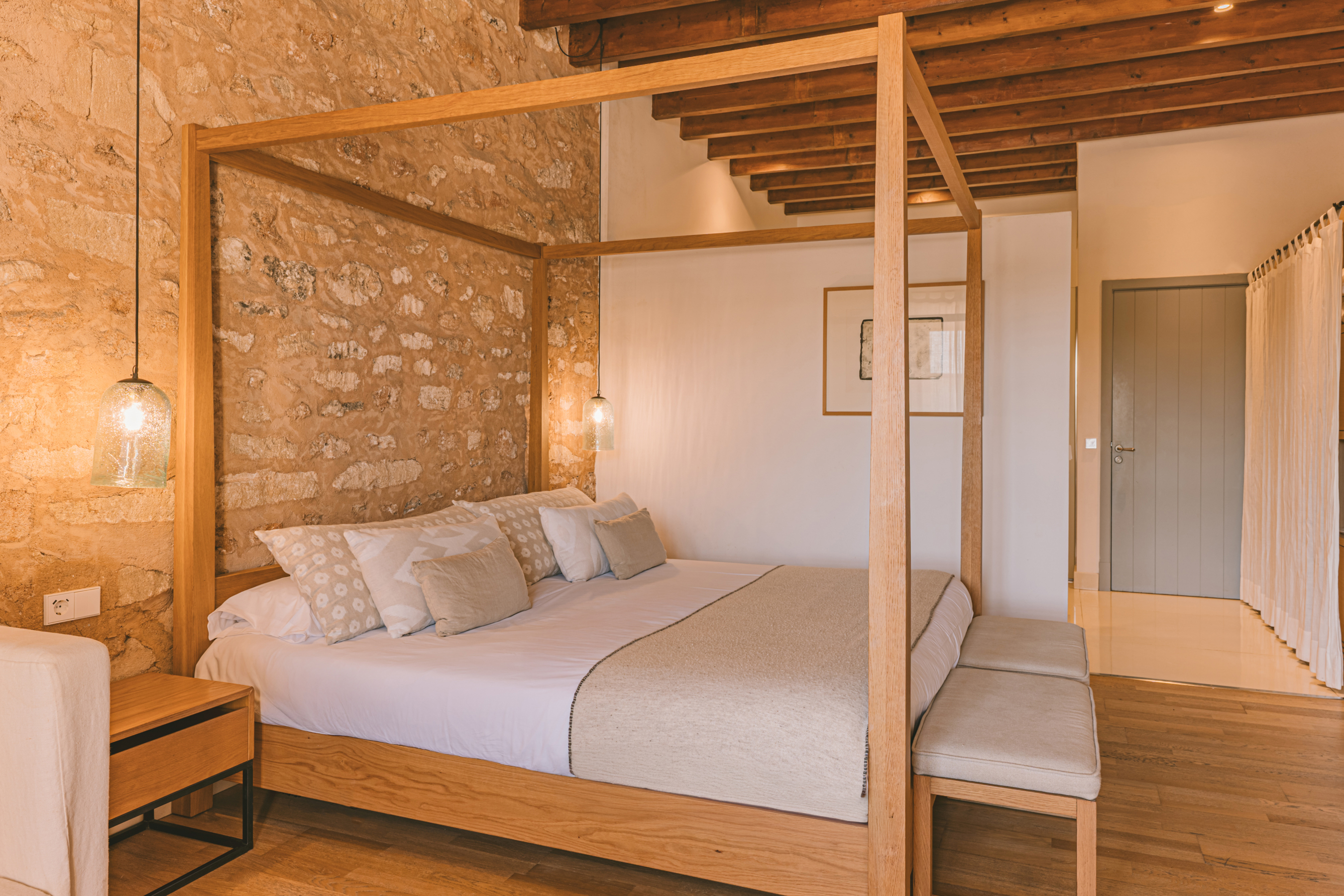
- The architecture of rest: as you cross our gates, the harshness of the medieval era gives way to Slow Luxury. Your muscles, tired from the walk, will find optimal cellular recovery in our suites, equipped with designer bathtubs, rain showers and breathable Egyptian cotton sheets, immersed in total acoustic insulation.
- The gastronomic reward: the calorie expenditure of climbing to the fortresses deserves a fitting repair. Without needing to get back in the car to find a restaurant, we suggest you round off the day at our bistro. You can dine in the shade of our holm oaks, savouring produce from our own organic garden (Zero Kilometre) and pairing the experience with local wines (IGP Mallorca) grown in the very valleys that King Jaume II's soldiers watched over seven centuries ago.

Frequently asked questions (logistical and strategic FAQ)
To close any operational gap in the planning of your cultural day, our concierge team answers our guests' most common strategic doubts:
Is it viable, in terms of time and physical effort, to visit the Castell de Capdepera and Sant Salvador in Artà on the same day?
Yes, it is logistically viable. Both fortresses are separated by barely 10 kilometres (about 15 minutes by car via the Ma-15 road). The ideal operational strategy to avoid fatigue and heatstroke is as follows: visit Artà at 09:30 in the morning to climb the sanctuary's 180 steps in the morning shade, return to the hotel or have lunch nearby, and reserve the Castell de Capdepera for 17:30. In the mid-afternoon, the heat eases on the coast and the golden light falling on the stone of the Capdepera castle offers the best illumination of the day.
Which fortress offers better panoramic views for landscape photography?
It depends strictly on your geographical preferences. If you want to photograph the Mediterranean Sea in its full splendour and clearly make out the profile of the island of Menorca on days with a clear atmosphere, the Castell de Capdepera is indisputably superior thanks to its frontal orientation towards the sea channel. If, on the other hand, you prefer inland landscape photography, almond fields, rustic terracotta roofs and the immensity of the Ferrutx mountain massif, the walled perimeter of Sant Salvador in Artà offers an unrivalled 360-degree interior panorama.
Do these monuments offer in-person guided tours by historians?
As a general rule, and due to the layout of the enclosures, both monuments are designed for self-guided visits at the traveller's own pace. The Castell de Capdepera, however, has modernised its information infrastructure. Along the walled route you will find acrylic panels with historical explanations and QR codes. By scanning these codes with your mobile phone, you can access complete audio guides free of charge, translated into several languages, which perfectly stands in for the in-person guide.