


8/17/26
The best time for an agritourism stay in northeast Mallorca: what to see and do month by month
The northeast of Mallorca, geographically bounded by the Llevant region, operates under a singular microclimate shaped by the regime of sea breezes and the topographical barrier of the Parc Natural de Llevant. Unlike the conventional coastal tourism model, which governs its activity under a binary calendar of summer opening and winter closure, a historic agritourism functions as a biologically active organism 365 days a year. The land, the botany and the climate dictate a cycle of continuous transformations that drastically alter the landscape, the acoustic density of the surroundings and the gastronomic offering.
The aim of this technical and agronomic analysis is to break down, month by month, the real climatic conditions of the Llevant region, identify the agricultural milestones of harvesting and flowering, and detail the outdoor exploration and wellness activities that are feasible so that you can precisely select the time of year that best matches your expectations for rest.
Climate, harvest and activity in the Llevant
To make the technical planning of your stay easier, we have laid out the atmospheric behaviour of the region, the productive cycles of our 18th-century estate and the recommended activities in the following annual matrix.
|
Quarter / Months |
Average daily temp. |
Agricultural milestone at the estate |
Main recommended activity |
|
January - March (Mild winter) |
11°C - 16°C |
Almond blossom and wild asparagus shoots. |
Long-distance hiking in the Parc Natural de Llevant and road cycling without thermal fatigue. |
|
April - June (Botanical awakening) |
17°C - 24°C |
Harvest of spring vegetables, strawberries and flowering of white rock rose and rosemary. |
Exploration of the historic heritage and coastal bathing in coves without human saturation. |
|
July - August (Bioclimatic refuge) |
25°C - 31°C |
Daily harvest from the garden (ramallet tomato, purple aubergine, seasonal pepper). |
Slow Summer: thermal rest under holm oak groves, swims in the private pool and al fresco dinners. |
|
September - December (Autumn and liquid gold) |
14°C - 25°C |
Grape harvest of local vineyards (IGP Mallorca) and olive beating for cold extraction of EVOO. |
Wine tourism, mycological gastronomic routes and fireside comfort in heritage suites. |
The mild winter and the botanical awakening (January to April)
The first four months of the year in the Mallorcan Llevant disprove the notion of winter dormancy. The proximity of the Mediterranean acts as a thermal regulator that prevents persistent frosts, creating a scenario of atmospheric stability that is ideal for outdoor sport and nature watching.
January and February: the optical spectacle of the almond tree
During the first two months of the year, average daytime temperatures range between 12°C and 15°C, with an atmosphere of high luminous clarity and low relative humidity in the central hours of the day. Agronomically, it is the time of almond blossom. The valleys that connect Capdepera with Artà and Son Servera shed their ochre tone to cover themselves in a white and pink mantle that transforms the landscape into a visually continuous surface.
In this two-month period, the agritourism becomes the base camp for road cyclists and mid-mountain hikers. The absence of traffic on the network of secondary roads in the northeast allows clean ascents to the Coll de Femenia or the Ermita de Betlem. On foot, it is the ideal season to walk the heritage itinerary that climbs to the Atalaya de Son Jaumell or to cross the trails of the Parc Natural de Llevant, where the first wild asparagus buds germinate among the Mediterranean undergrowth, without suffering the energy expenditure derived from summer thermal stress.
March and April: floral emergence and rural Easter
With the arrival of the spring equinox, the thermometer experiences a gradual climb towards highs of 18°C to 21°C. In the organic garden of Predi Son Jaumell, the limestone soil begins its main productive cycle. The aromatic herbs endemic to the coast sprout spontaneously: sea fennel, winter thyme and rosemary. In parallel, the open-field sowing of short-cycle vegetables is carried out and the first artichokes and tender broad beans are harvested, going straight to the kitchens of our bistro.
The natural environment of the Llevant experiences a botanical emergence dominated by the flowering of the pink-flowered white rock rose and the appearance of endemic wild orchids on the sea-facing slopes. March and April represent the optimal moment for cultural and architectural exploration. Visits to medieval fortresses such as the Castell de Capdepera or the walled enclosure of Sant Salvador in Artà are made in absolute comfort temperatures, integrating heritage tourism with morning walks along beaches and coves that preserve their original topographical profile before the installation of seasonal infrastructure.

The light, the tradition and the refuge (May to August)
As the year advances towards the summer solstice, the dynamics of the agritourism change radically. The offering shifts from daytime physical exploration towards sensory contemplation, daily harvest gastronomy and the use of traditional bioclimatic architecture as an antidote to extreme heat.
May and June: thermal balance and living heritage
May and June offer the perfect thermodynamic balance in the western Mediterranean. With average temperatures that progressively evolve from 22°C to 26°C and a sea water temperature in constant rise (reaching 21°C in June), the Llevant coast becomes fully accessible for bathing and open-water swimming.
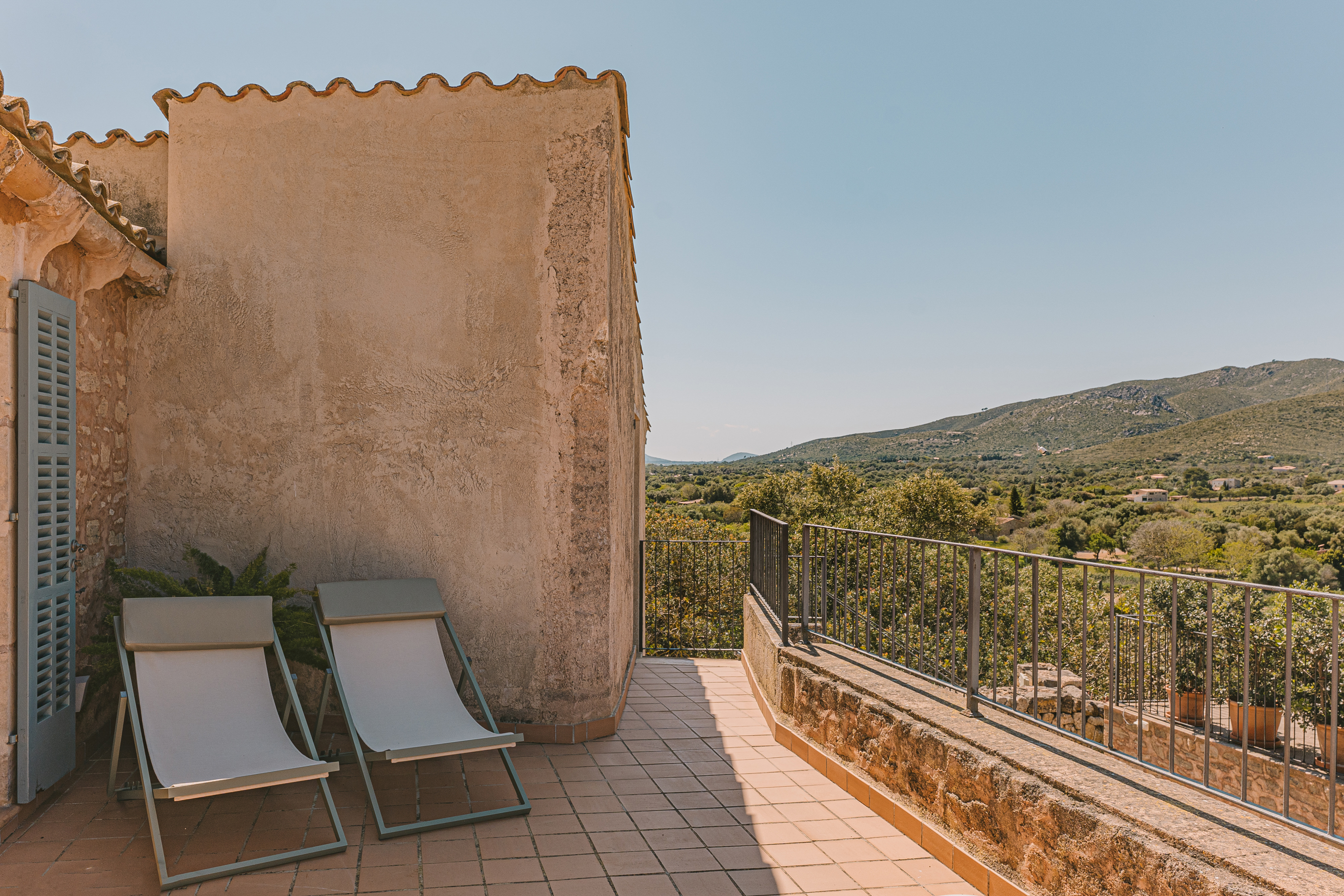
In the heritage sphere, the month of May is marked by the celebration of the historic Mercat Medieval de Capdepera. Over a single weekend, the walled village and the accesses to the 14th-century fortress step back in time, hosting artisans, blacksmiths and specialists in ancient gastronomy in a rigorous re-enactment that celebrates the founding of the town by mandate of King Jaume II. On the estate, the garden constantly produces wild strawberries, courgettes in flower and the first stone fruits (apricots and early cherries), which determine the composition of the à la carte breakfast served on our east-facing terraces.
July and August: the bioclimatic physics of an 18th-century estate
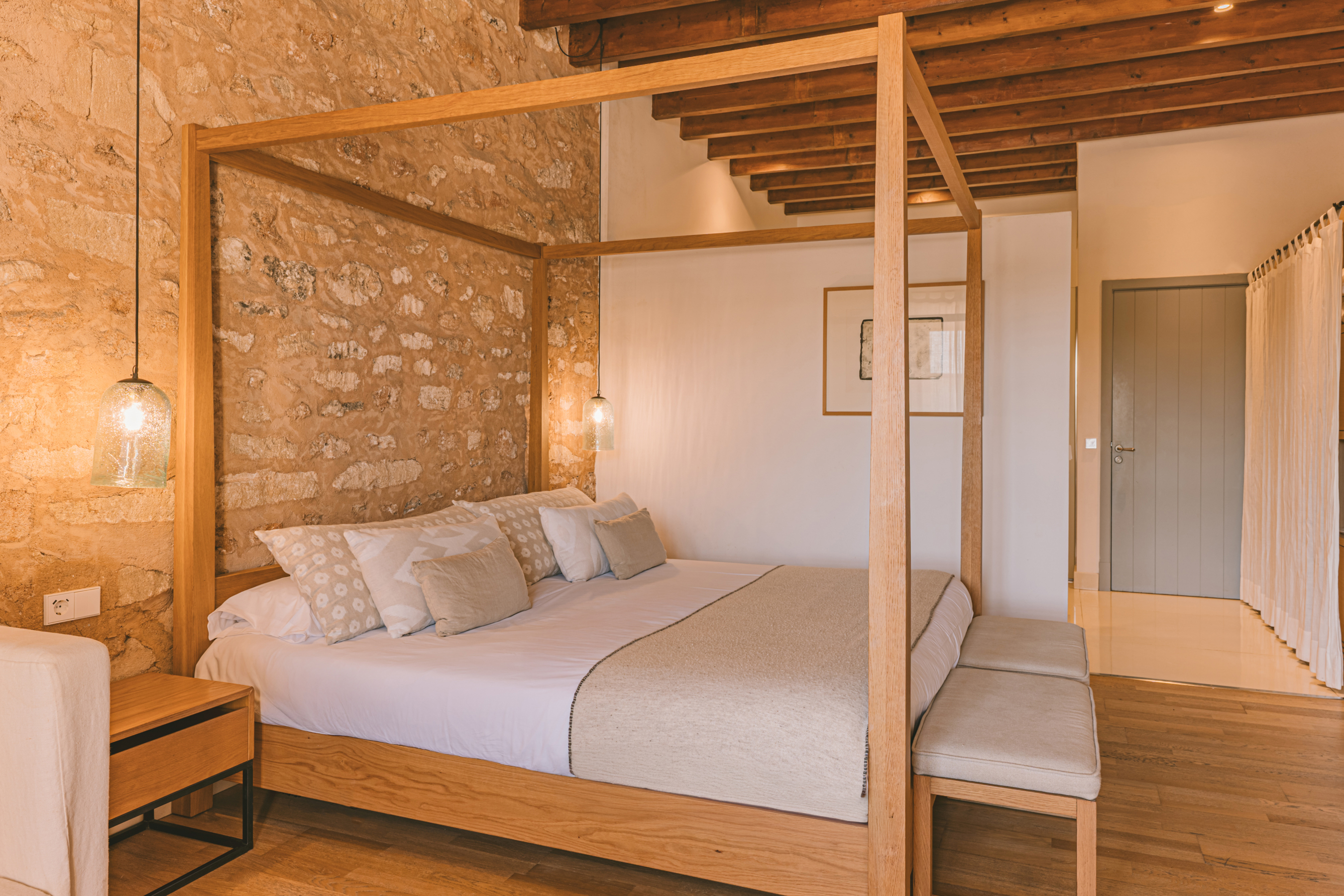
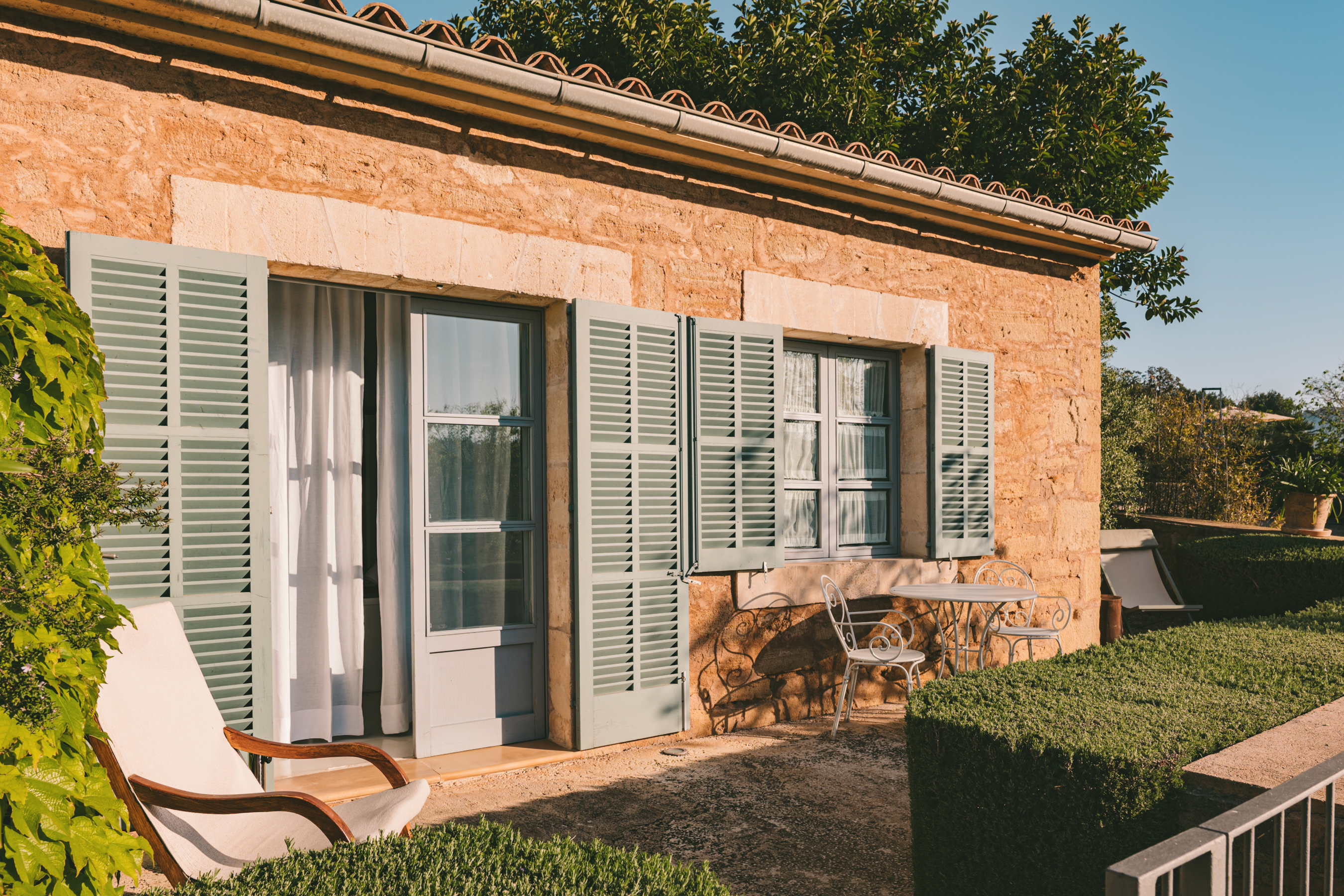
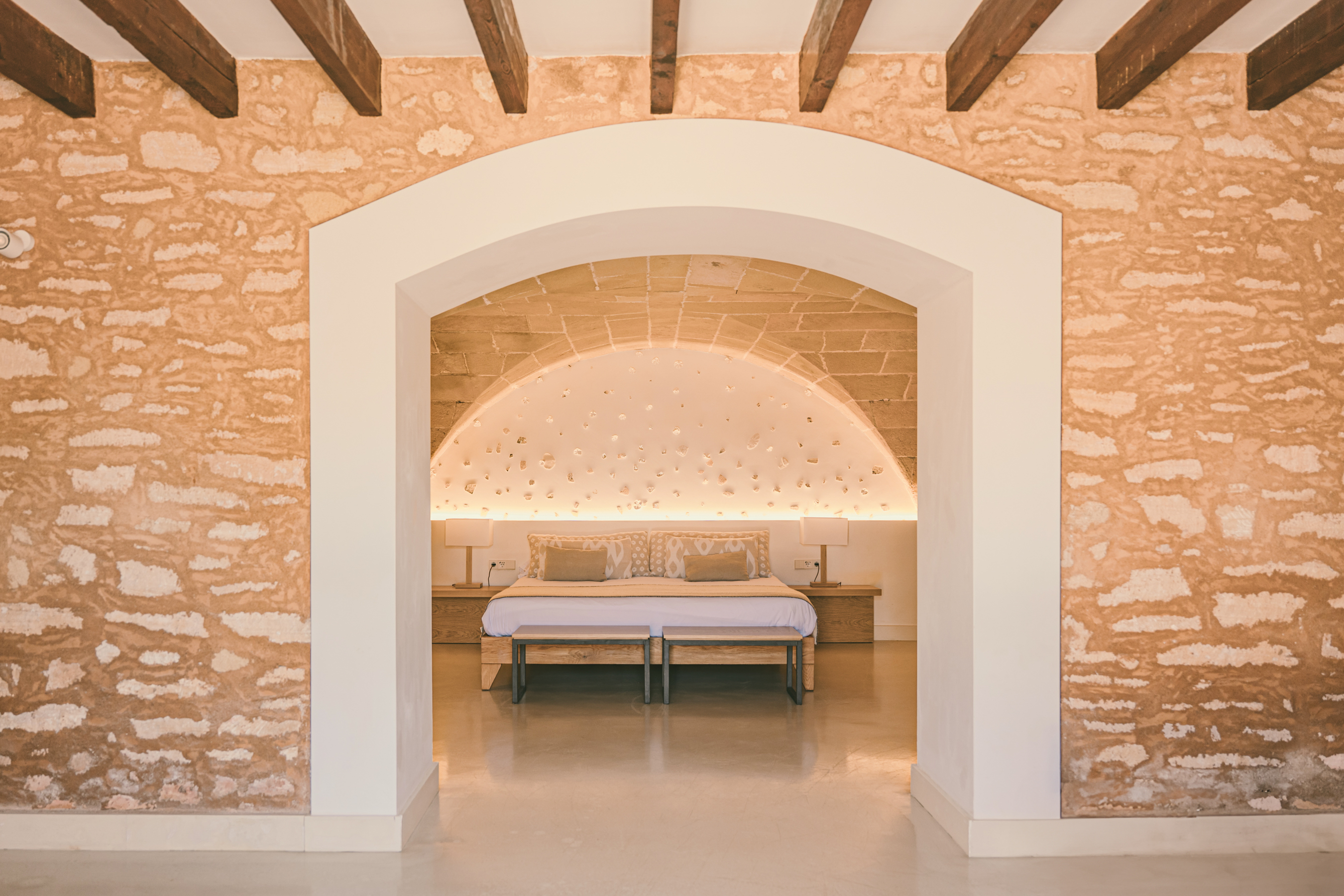
When the months of July and August impose a regime of high temperatures across the entire Balearic archipelago —with highs exceeding 31°C in urban and overcrowded coastal areas—, the vernacular architecture of Predi Son Jaumell demonstrates its technical superiority as a sanctuary of thermal and acoustic comfort. Our estate, a historic possessió of medieval origin renovated in the 18th century, was built by applying strict principles of elemental bioclimatic design that modern engineering tries to emulate today.
The secret of this passive cooling lies in the physics of the materials. The structural walls of the main building are constructed with Mallorcan limestone masonry and lime mortar, reaching thicknesses that range between 80 and 120 centimetres. This stone mass possesses a high volumetric heat capacity and a low thermal diffusivity, generating a physical phenomenon of delayed thermal inertia. During the hours of maximum daytime insolation, the wall absorbs the outside heat very slowly without transmitting it to the interior of the suites. The thermal lag is approximately 8 to 10 hours, which means the rooms maintain a constant natural temperature, between 4°C and 6°C below the outside temperature, reducing the need for artificial climate control to a minimum and eliminating the noise of mechanical compressors.
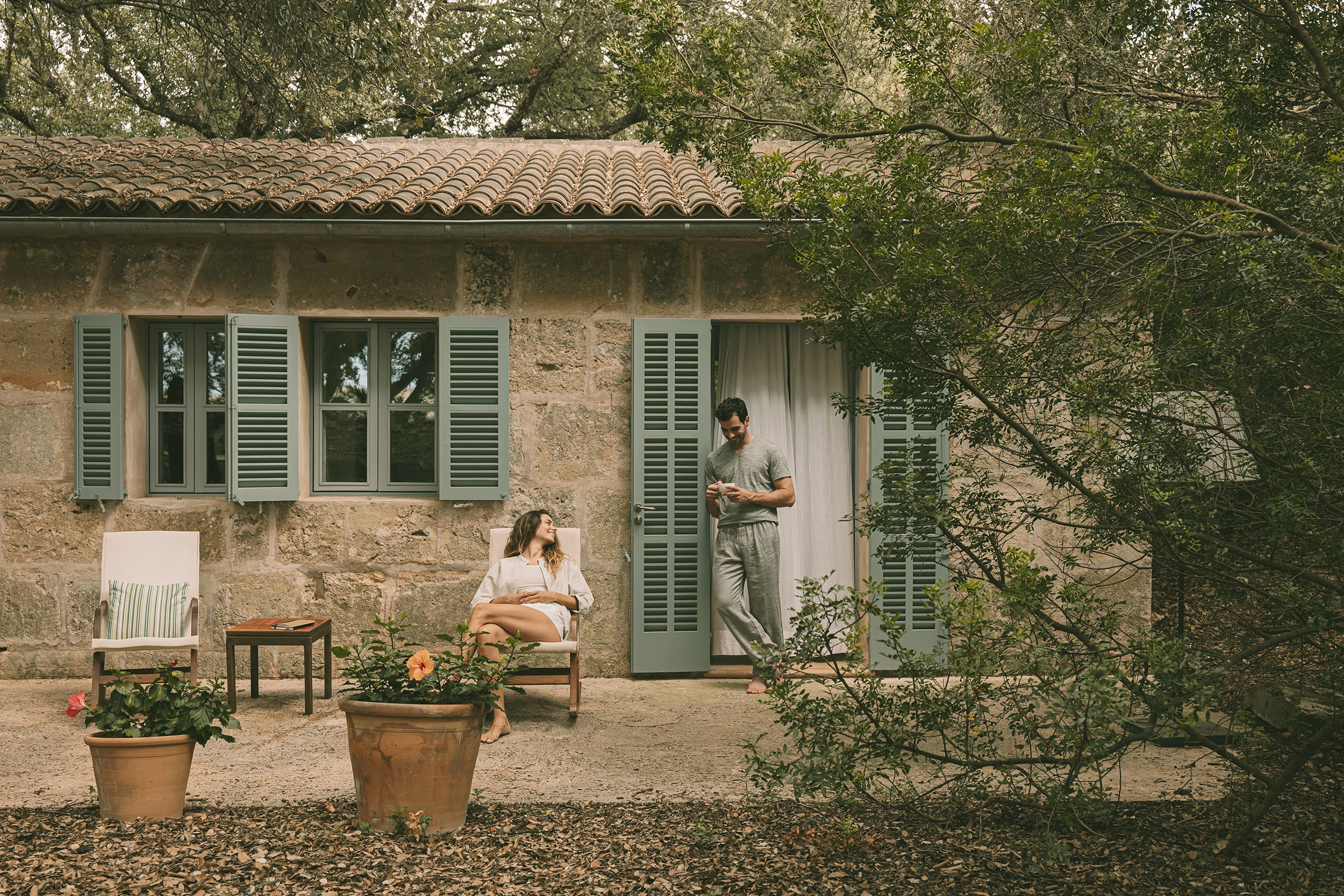
Added to this architectural shield is the microclimatic regulation exerted by the forest mass that surrounds the property. The wood of centuries-old holm oaks and carob trees casts a perennial shade over the estate's courtyards and paths. Through the physiological process of evapotranspiration —by which the trees absorb water from the subsoil and release it in the form of vapour through their leaf stomata to cool their leaves—, the forest reduces the ambient air temperature of the surroundings by a verifiable differential of 3°C compared to the asphalted ground outside.
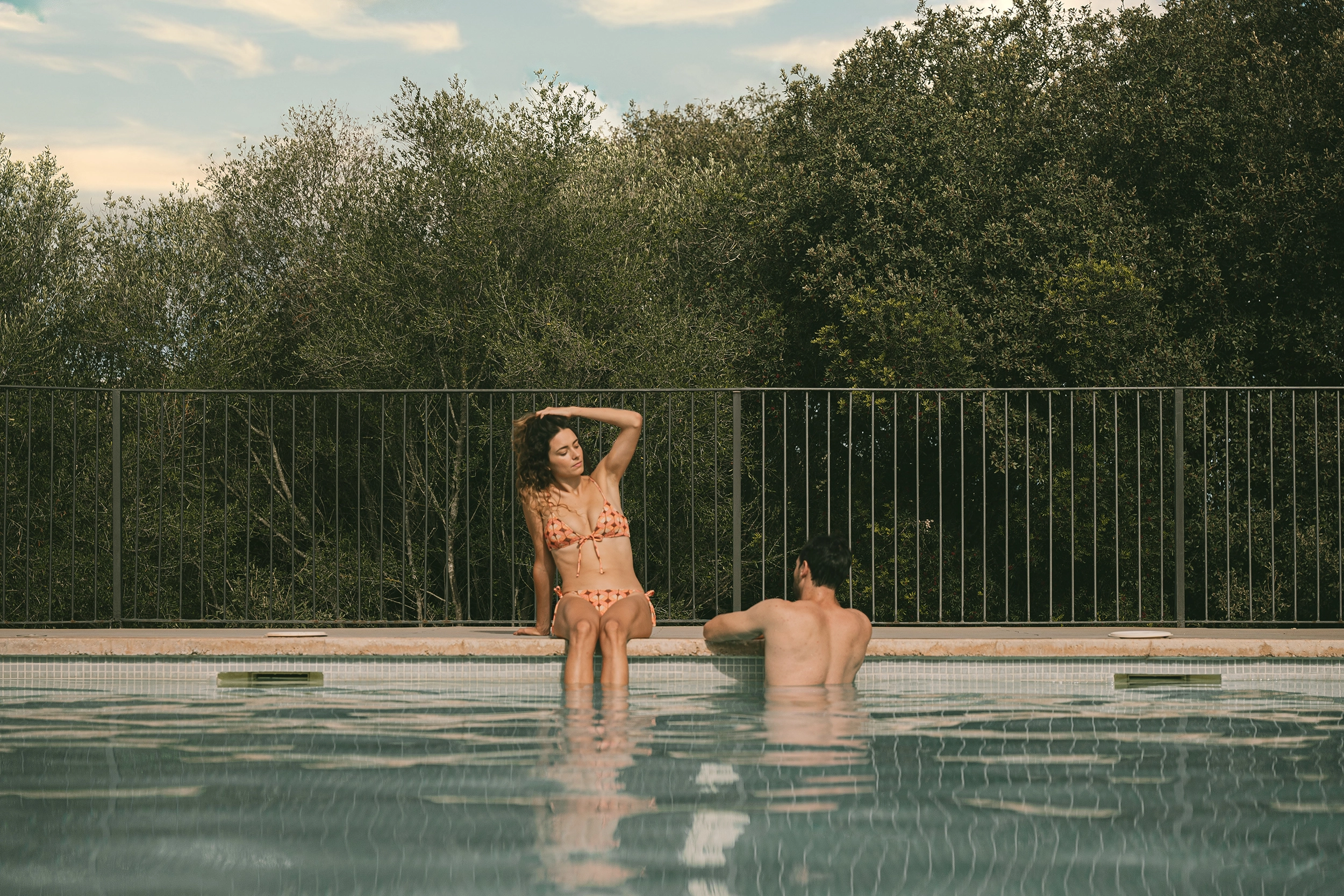
On the agronomic level, July and August represent the productive peak of our organic Farm to Table garden. It is the season of maximum harvest of the ramallet tomato (a native long-keeping variety hung in strings), the purple aubergines, the white peppers and the dryland courgette. The days at the agritourism in the height of summer are structured around this environmental comfort: mornings of reading in the shade of the holm oak grove, leisurely dips in the private pools of the suites and late dinners at the bistro, where the descending breeze from the hills of Capdepera lets you enjoy the gastronomy in the fresh air in absolute silence.
The grape harvest, the liquid gold and the calm (September to December)
The last four months of the year restore to the land its productive prominence of heavy harvesting. The drop in temperatures activates the final ripening processes of the vine and the olive tree, opening a window of gastronomic and sensory tourism of very high cultural value in the Llevant.
September and October: the grape harvest and the warm autumn sea
September and October represent, for many in the know, the most rewarding months of the Balearic calendar. The atmospheric temperature drops towards an ideal range of 22°C to 26°C, but the thermal inertia of the Mediterranean Sea retains the heat accumulated during the summer, keeping the water at 24°C well into October. This combination allows coastal bathing to be prolonged on unspoilt beaches in an environment of calm and very reduced human density.
In the countryside, the end of the afternoon is dominated by winemaking activity. It is the season of the grape harvest in the wineries covered by the Protected Geographical Indication (IGP) Mallorca and the Pla i Llevant Designation of Origin. The harvest of native varieties such as Callet, Manto Negro, Prensal Blanc and Giró Ros transforms the aroma of the region's country estates. It is the perfect moment to undertake technical wine tourism routes, visit small boutique wineries in the valleys of Artà and Capdepera, take part in tastings led by local oenologists and cycle along the paths that wind between vineyards tinged with reddish and golden tones.
November and December: the extraction of EVOO and the 'Hygge' retreat
With the arrival of November, the Mallorcan climate takes on a distinctly autumnal character, with mild daytime temperatures that range between 14°C and 18°C, and cool nights that call for light warm clothing. The agronomic event of the two-month period is the olive harvest in the estate's historic olive groves, made up of the Mallorquina, Arbequina and Picual varieties.
The traditional harvesting process —the manual beating of the olive tree— is carried out to gather the fruit at its exact point of veraison (when the olive changes from green to purplish). The fruit is transferred immediately to the mill for mechanical grinding and cold extraction at less than 27°C, obtaining the freshly harvested Extra Virgin Olive Oil (EVOO). This "liquid gold", characterised by its high concentration of polyphenols, pungent herbaceous notes and a peppery tingle in the throat that denotes its antioxidant purity, becomes the common thread of all the winter tastings and tasting menus of our restaurant.
In December, the agritourism embraces the concept of Mediterranean Hygge. The estate transforms into a refuge of introspection, reading and silence. The day begins with morning walks under the mist that covers the holm oak groves of the Llevant, continues with the gathering of wild mushrooms (esclatasangs or saffron milk caps) in the coastal pine forests, and culminates inside our heritage suites, where the lighting of the holm oak wood fireplaces provides an organic warmth that invites muscle rest and digital disconnection before the turn of the year.
The Son Jaumell ecosystem and the coastal connection with Hotels VIVA
The vitality of an agritourism like Predi Son Jaumell lies in its architectural versatility to adapt to the metamorphosis of these four seasons. Our estate does not impose a single model of stay, but rather changes its operations in a way that is consistent with the biological calendar of Mallorca: the open courtyards, shaded terraces and outdoor freshwater pools are the epicentre of the warm half-year, while the lounges with fireplaces, the hearty gastronomy (root broths, game and seasonal mushrooms) and the masonry walls become the thermoregulated refuge of the cool half-year.
However, the perfect trip to northeast Mallorca does not require giving up the duality of the island landscape. For those travellers who want to contrast the centuries-old stillness, the agricultural rootedness and the sound isolation of our inland estate with the scenic majesty of the open coast, the geography of Capdepera offers a natural transition without logistical friction. Just ten minutes by car from the dirt tracks of Predi Son Jaumell, the maritime coast opens towards the imposing dune system of Cala Mesquida, one of the best-preserved and most protected coastal spots in the Balearic archipelago.
It is in this enclave where residential complexes of our sister brand, such as VIVA Cala Mesquida Suites & Spa Adults Only 16+, let you complement the country retreat with a coastal experience of wellness and thalassotherapy. Designed under the same Slow Luxury philosophy, this establishment exclusively for over-16s offers spacious suites with horizontal terraces, specialised spa centres and sports facilities located literally in front of the turquoise waters of the Llevant. This synergy of locations lets the sophisticated traveller put together a mixed holiday: sleeping wrapped in the bioclimatic silence of an 18th-century holm oak grove in the agricultural interior, and enjoying by day the hydrothermal infrastructure and the unlimited sea views of the coastal front, uniting the agronomic tradition of the land with the horizon of the Mediterranean Sea.
Frequently asked questions about rural seasonality
To resolve the most common technical doubts in the purchase decision and route planning phase for our travellers, the estate's agronomic management and reception team answers the following key queries about the seasonal behaviour of the Llevant:
When exactly does the visual peak of the almond blossom occur in the region of Capdepera and Artà?
The biological phenomenon of almond blossom is not governed by a fixed date on the Gregorian calendar, but by the prior accumulation of winter chill hours and the solar incidence of the first weeks of the year. In the Llevant region, due to its eastern geographical orientation and the thermal protection of the mountainous relief, the early floral emergence tends to be slightly ahead of the inland areas of the island. As a constant statistical rule, the peak of maximum visual flowering —when the trees reach 100% opening of white petals (sweet almond varieties) and pink petals (bitter almond varieties)— is consistently located in a window between the last week of January and mid-February. For landscape photography and bike routes through the flowering fields of Son Servera and the valley of Artà, the first fortnight of February represents the operational window of maximum guarantee.
Is it biologically and logistically advisable to stay at a rural hotel in Mallorca during the central months of winter (January and February)?
Yes, emphatically, as long as the expectations of the trip are aligned with nature tourism, heritage, outdoor sport and harvest gastronomy. From a bioclimatic perspective, winter in the northeast of Mallorca is extremely mild and benign compared to the continental European or peninsular winter, presenting a moderate rainfall index and an average of 6 to 7 hours of direct sunshine a day. Logistically, the winter season offers unbeatable advantages for the independent traveller: the absolute absence of saturation on the roads allows access by private vehicle to remote coves, historic watchtowers and panoramic viewpoints of the eastern Serra de Tramuntana that during the summer suffer parking or capacity restrictions. It is the optimal season for practising road cycling and long-distance hiking without the risk of dehydration or thermal fatigue, enjoying on your return the technical comfort, the silence and the restorative cuisine of our historic estate.
In what exact way does the seasonal transition and the change of month influence the menu served in the restaurant of Predi Son Jaumell?
The gastronomic operation of our restaurant does not work through static annual menus, but is governed by a strict doctrine of Zero Kilometre and Farm to Table dictated by the daily production of our own organic garden cultivated within the perimeter of the property. Therefore, the menu is an edible reflection of the astronomical and agronomic calendar. During the autumn and winter months (from November to February), the kitchen processes ingredients of comforting caloric density: wild mushrooms (esclatasangs), purple artichokes, seasonal cabbages, underground roots, local small game and freshly milled extra virgin olive oils. In spring (from March to May), the menu shifts towards vegetable freshness: teardrop peas, tender broad beans, wild asparagus, fried courgette flowers and rockfish caught by the coastal fleet of the nearby port of Cala Ratjada. Finally, in the summer half-year (from June to September), the offering transforms to combat the heat by means of raw fish, cold soups made with tomatoes from our garden ripened in the sun, roasted peppers, tender aubergines, fresh figs gathered on the estate at dawn and artisanal pastries based on the apricots, peaches and almonds native to the Llevant region.